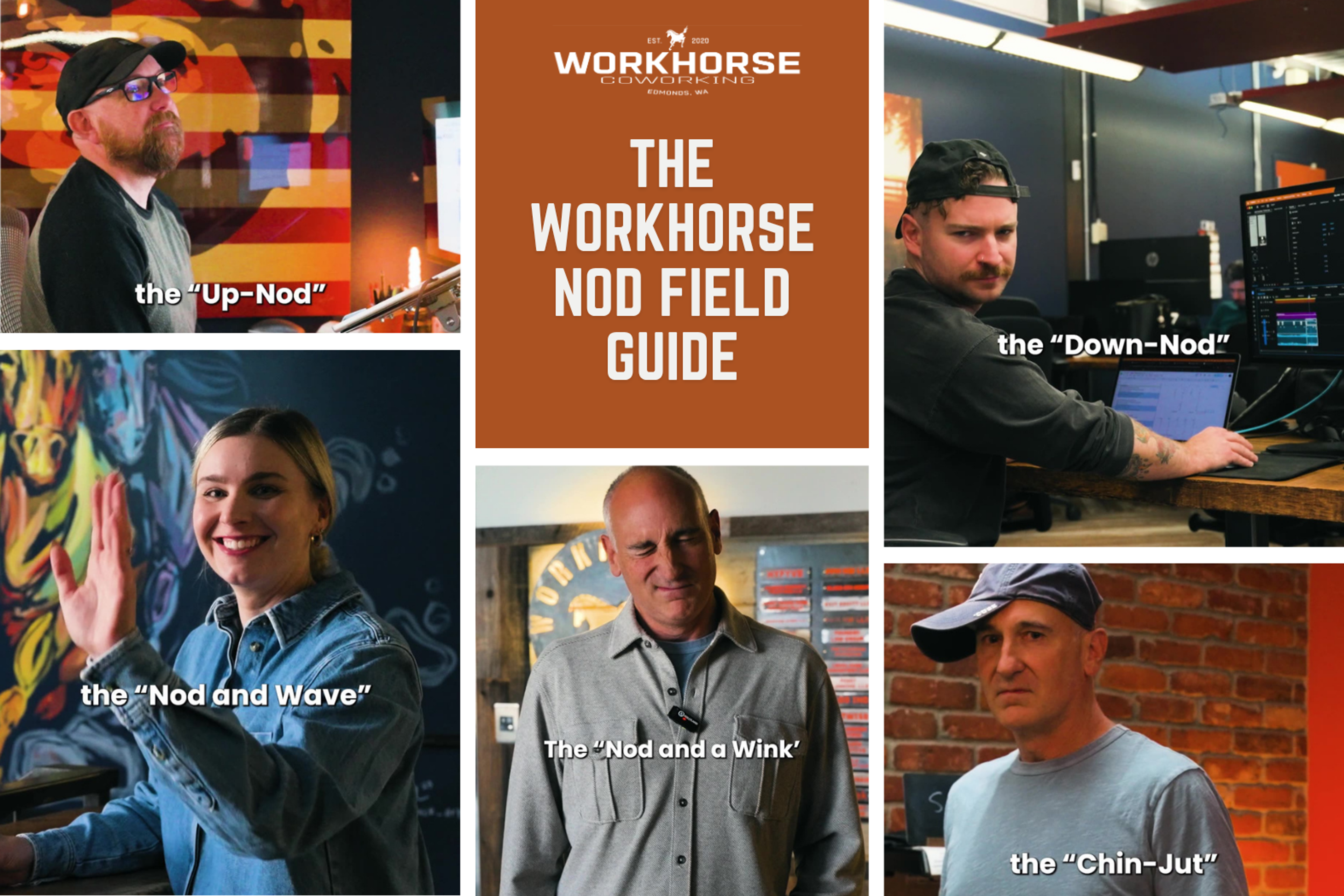
Every town has a language, its own quirks and nuances. Seattle has caught a bad rap for its “Seattle Freeze,” and even though we are adjacent in Edmonds, you’ve probably experienced a higher level of friendliness here. We hope you have, at least.
In Edmonds, and at Workhorse especially, we’ve created the unspoken language of The Nod. Larry, the owner, has become quite passionate about it, as you’ll see shortly. And what’s great about The Nod is it comes in many forms, all of which you can make your own: A chin dips here, lifts there, and a whole social contract gets signed in half a second.
We haven’t talked about The Nod enough. So, here we are, changing that today. It’s the cheapest act of belonging around. No words, no commitments, no small talk about the weather. Just a flick of the head that says I see you, we live here, as you were…or provides an opening for deeper connection.
And, as you know, Workhorse is all about connection. So, without much further ado, and with a lot of instruction from Larry, let’s talk about nod options (nodtions? :)).
The Fundamental Nods
These are the load-bearing nods. Master them, and you’ll fit in anywhere.
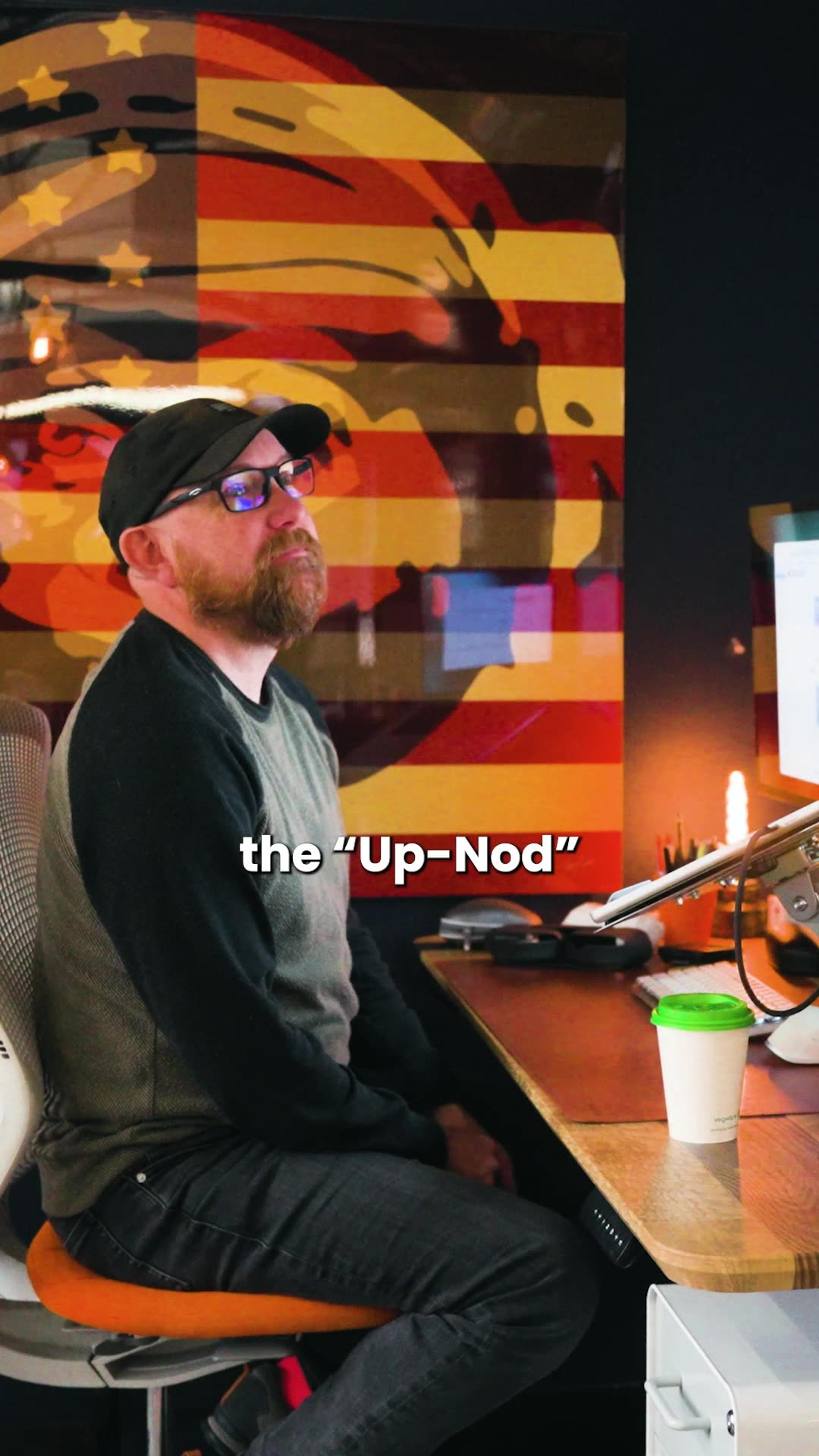
The Up-Nod
The chin lifts quickly, like it’s checking for rain. It says we’re equals. Use it with people who share your age, your sneakers, or your truck. Overdo it, and you’ll look like you’re sniffing the air for trouble.
The Down-Nod
The chin drops. This is the respectful nod, reserved for the retired schoolteacher, the pastor, and the man who’s run the hardware store since 1971. It carries a faint bow. Your grandmother would approve.
The Double Nod
Two quick dips. Bip-bip. This one has warmth. It says Oh, it’s you, not Oh, it’s a person. Save it for people whose names you know, or at least whose dogs’ names you know.
The Side Nod
The head tilts, one ear toward the shoulder. It’s deeply ambiguous. It can mean hello, come here, what’s your deal, or I pulled something in my neck. Context is everything, so use it with caution around strangers.
The Enhanced Nods
Consider these the upgraded nods. They’re for when the head alone isn’t enough, or is too much. You’ll see.
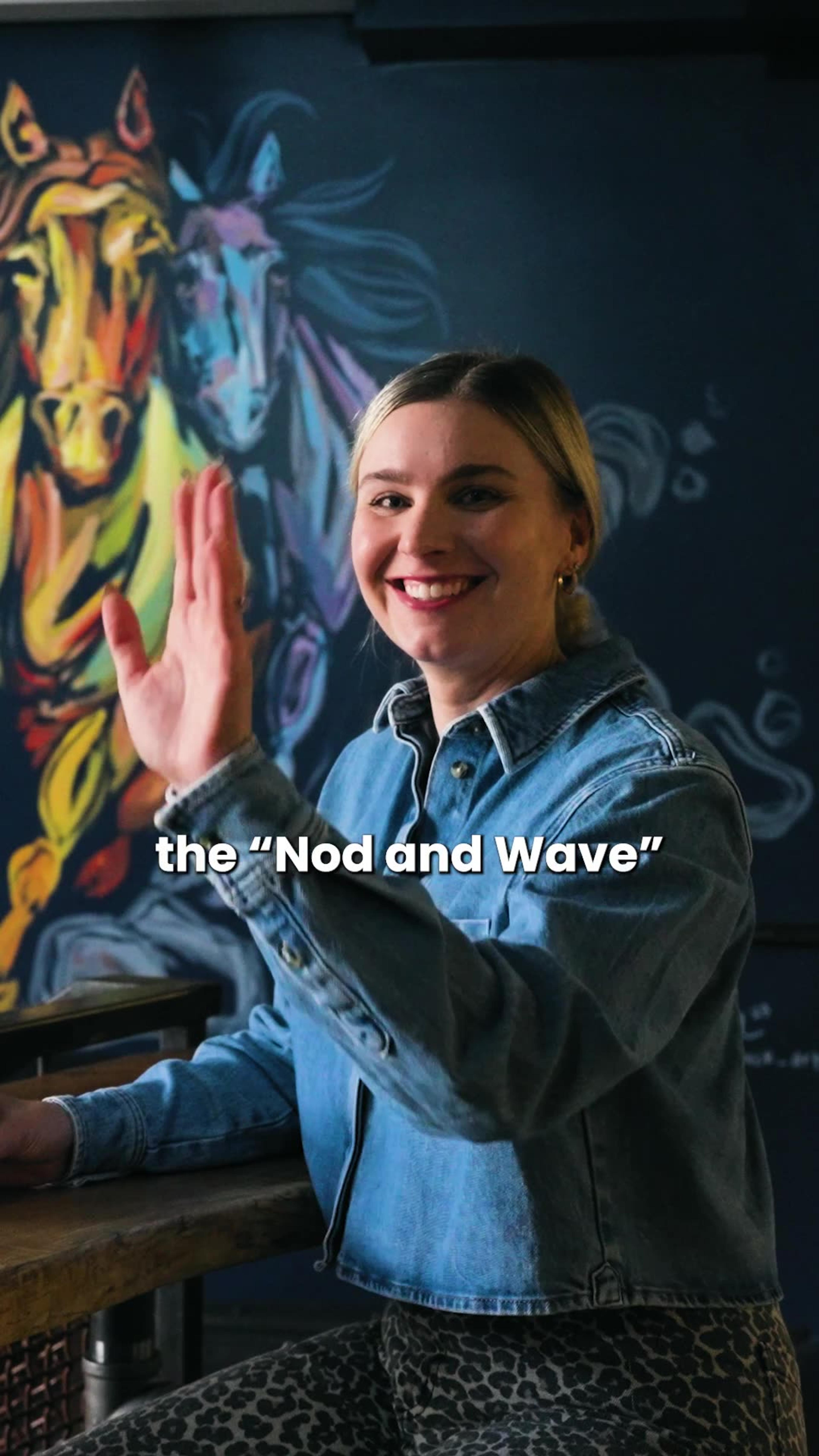
The Nod-and-Wave
The head says hello, then the hand, not trusting the head, says it again. Belt and suspenders. Use it across streets, parking lots, and any distance over forty feet.
The Nod-and-Smile
This nod is the workhorse of neighborhood life. If the nod is a handshake, this is a handshake with eye contact. You’ll do it four hundred times a year at the grocery store. It asks for nothing and gives just enough.
The Eyebrow Flash
No nod at all. Both eyebrows lift and drop in a fifth of a second. This is the minimalist’s greeting. Researchers have documented it across cultures, and your uncle insists it’s how you know someone’s cool.
The Group Nod
One dip, four people. You’re passing a table outside the coffee shop and can’t nod individually without looking like a bobblehead. So you issue one broad, blanket nod. It’s a press release for the head.
The Slow Reverent Nod
A long, deliberate lowering of the chin, held for a beat. Reserved for funerals, veterans, and seriously impressive dogs. If someone gives you this nod and nobody has died, you’ve done something heroic, or you’re carrying a very good sandwich.
The Aggressive Nods
These are nods with an agenda. Use with caution.
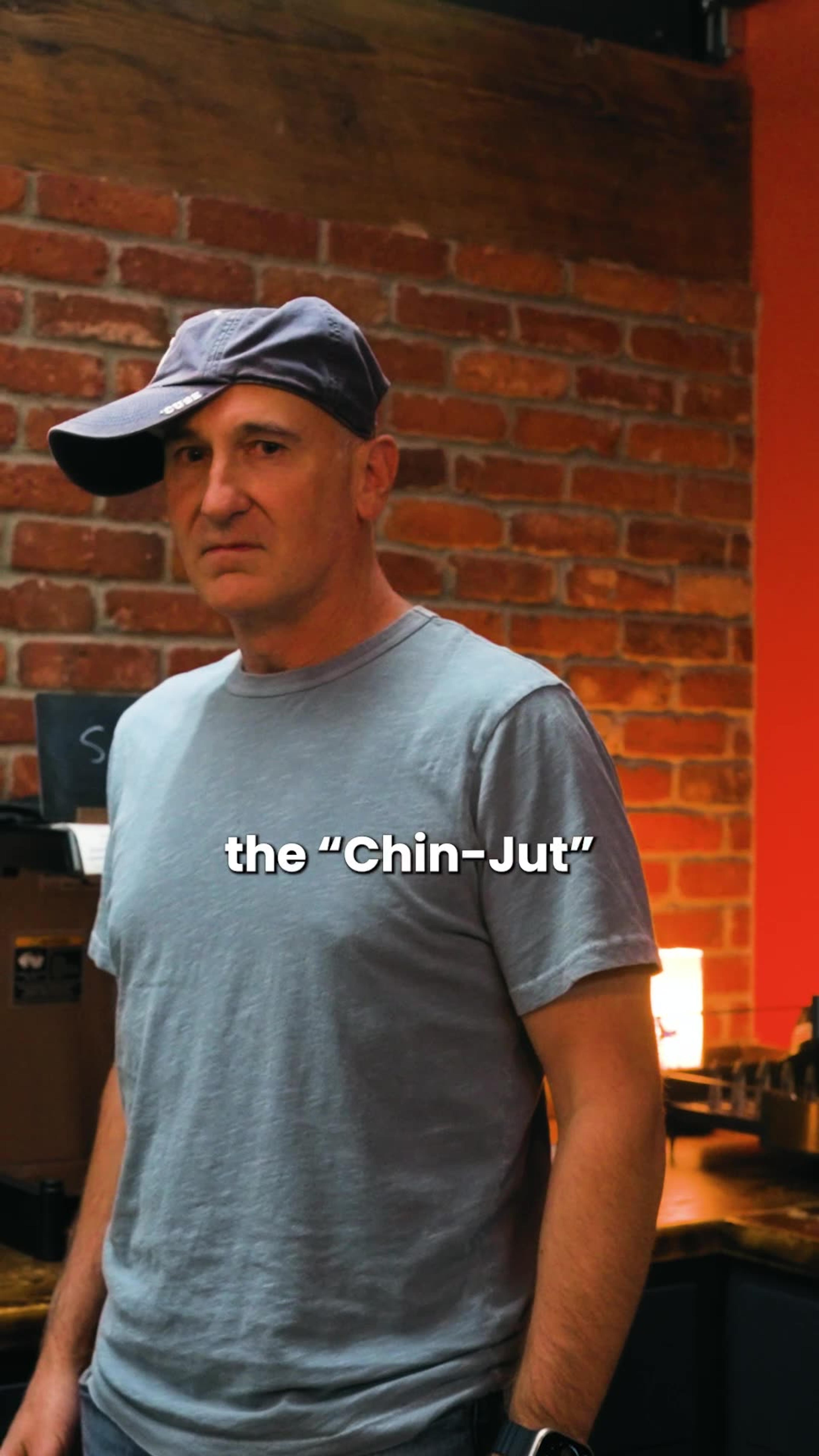
The Chin-Jut
This is the up-nod’s cousin who got kicked out of school. The chin thrusts forward, often with a squint. It can mean Sup?, or it can mean Are you looking at my parking spot? It’s most common at gas stations after 10 p.m.
The Triple Nod
Three rapid dips. Over-eager. Nobody needs three. It’s what happens when enthusiasm outruns judgment. In some settings it’s legally binding. People have joined committees this way.
The Failing Nods
Every art form has its disasters. Ours are below.
The Delayed Nod
Recognition arrives a second and a half after the window closes. You’ve already passed each other. Now, alone on the sidewalk, you nod firmly at the back of their head. Nobody sees it except the guy across the street, who now thinks you’re agreeing with a lamppost. Pure grief.
The Phantom Nod
The chin is airborne, and mid-flight you realize they aren’t looking at you. They’re looking past you at a bus, a friend, or a very interesting pigeon. There’s no recall on a nod. You finish it, then turn it into a neck stretch, as if you’d been meaning to work out that knot all day.
The Half-Nod Abort
You start to nod, then realize you don’t know this person, or you do, and you owe them money, or you’re not sure it’s them at all. The nod stops halfway and hangs there. You look like a pigeon that heard a noise. You’ll both think about it tonight.
The Final Boss Nods
The Reciprocal Escalation
This is the tragedy of the form. It begins as courtesy: they nod, so you nod. Your nod runs a touch bigger, so they answer with a double. You add a smile. They add a wave. Now you’re hailing a cab. It’s an arms race, and nobody wins. Eventually someone breaks and says, “Hey, how’s it going?” Neither of you wants an answer. You both keep walking mid-sentence as the reply fades into traffic.
Why The Nod Matters
Go ahead and laugh. Larry came up with this whole bit so you would. But the nod does real work. Every one of them, even the phantom ones, is a tiny vote that we share a place. The barista, the mail carrier, the kid on the skateboard, and the guy with the loud motorcycle are all in this together, more or less.
A town where people stop nodding is a town where people stop seeing each other. That’s why we built Workhorse to feel like a true community. Our members nod at each other from the Hot Desks, trade names at the water cooler, and end up knowing each other’s dogs long before they know each other’s job titles.
Spot a nod from this guide while you’re in the space? Let us know! Comment on our nodding videos on @workhorse_coworking on Instagram or @workhorsecoworking on Facebook to tell us what you saw. Which nod is your go-to?